Uad Mueang Korat 2026: From City Branding to the Festival Economy — Creating Opportunities Beyond the Festival
How can a city use festivals to create lasting economic opportunities? “Uad Mueang Korat” explores this question by bringing together 100 local participants to identify 10 creative values that define Nakhon Ratchasima. These insights will help shape the city’s identity through City Branding, alongside K-BATTLE International Street Culture Festival 2026, under the concept “The City Beyond the Festival.”
Urban development does not always need to begin with creating something new. Sometimes, the more important task is rediscovering the strengths a city already possesses and exploring how those values can be transformed into opportunities that benefit its communities.
This is the foundation of Uad Mueang Korat, an initiative that views city branding as more than promoting tourist attractions or creating a new public image. Instead, it focuses on identifying Nakhon Ratchasima’s unique identity and potential, then connecting these strengths with the creative economy, tourism, investment, and long-term urban development.
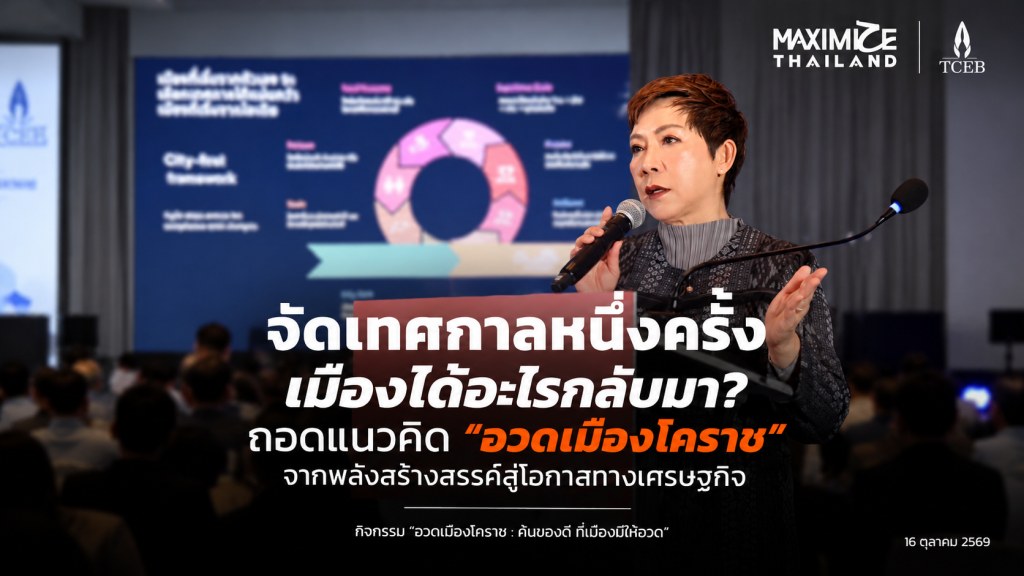
This vision was reflected in the presentation “Uad Mueang Korat: Transforming the City’s Creative Strengths into Opportunities for Its People” by Dr. Supawan Teerarat, President of the Thailand Convention and Exhibition Bureau (TCEB), who highlighted the role of festivals as tools for generating economic and social value for cities.
What Is Uad Mueang Korat? City Branding Begins with City DNA
Every city possesses its own identity, or City DNA, shaped by its people, culture, local wisdom, lifestyles, and economic activities developed over time.
For Nakhon Ratchasima, city branding does not mean replacing its existing identity with something entirely new. Rather, it involves discovering the values already embedded within the city and communicating them in ways that allow wider audiences to recognise its diverse potential.
The Uad Mueang Korat initiative therefore brings together 100 participants from various sectors of the local community to identify 10 creative values that represent the city. This participatory approach ensures that the city’s narrative and future development direction originate from local perspectives.
Before a city can tell its story to the world, it must first understand what its residents value and the direction in which they want their city to grow.
Korat’s Creative Potential Extends Beyond Culture
The creative economy is often associated with art, design, or cultural heritage. However, Nakhon Ratchasima’s strengths extend far beyond these fields, encompassing agriculture, food, manufacturing, technology, sports, and local businesses.
These sectors offer opportunities to develop new products, services, and experiences that reflect the city’s distinctive character.
Identifying City DNA therefore goes beyond collecting interesting local stories. It is about exploring how a city’s existing resources and strengths can be transformed into future economic opportunities.
What Is the Festival Economy, and How Can Festivals Create Value for a City?
One of the central concepts behind Uad Mueang Korat is the Festival Economy, which considers the economic impact of festivals beyond revenue generated within the event venue.
A single festival can stimulate economic activity before, during, and after the event.
Before a festival begins, benefits may arise from venue preparation, employment, accommodation bookings, and the procurement of goods and services. During the event, visitors generate spending through restaurants, transportation, tourism, and local businesses. Even after the festival concludes, further opportunities may emerge through repeat visits, repeat purchases, and continued business partnerships.
Festival success should therefore not be measured solely by attendance figures or social media engagement. It is equally important to assess how the host city and its residents benefit.
This reflects a fundamental principle: Event Success does not always equal City Value.
A festival may attract large crowds and generate considerable attention, yet its contribution to the city may remain limited if revenue and business opportunities are not effectively distributed among local enterprises.
City-wide by Design: Connecting Festivals with the City to Expand Economic Opportunities
For festivals to deliver meaningful benefits to a city, connections between the event venue and the surrounding economy must be intentionally designed.
The City-wide by Design approach emphasises integrating festivals with neighbourhoods, local shops, tourism routes, and businesses, encouraging visitors to experience more of the destination beyond the event itself.
For example, connecting festival activities with local restaurants, tourist attractions, or creative districts can help distribute visitor spending across a wider range of businesses.
When participants have more reasons to explore different parts of a city, festivals can become gateways to discovering the destination and building long-term relationships between visitors and local communities.
K-BATTLE International Street Culture Festival 2026 and the Development of Korat’s Creative Economy
One of the key platforms associated with Uad Mueang Korat is K-BATTLE International Street Culture Festival 2026, which has been positioned as more than a street culture festival.
K-BATTLE brings together competitions and performances alongside the SOUNDER music festival and K-BATX Creative Industry Expo, creating opportunities for creative professionals, entrepreneurs, and businesses to connect.
By integrating different types of activities, the festival expands its role beyond entertainment to become a platform for professional networking and business development.
The initiative targets an economic impact of THB 2.458 billion, reflecting its ambition to use festivals as a mechanism for supporting the city’s economy.
However, a festival’s value does not depend solely on its scale. Its long-term significance lies in how effectively it connects activities with local communities and businesses, allowing benefits to continue beyond the event.
From Local Seed to International Platform: How Can Festivals Grow Sustainably?
Developing an internationally recognised festival does not necessarily require organising a large-scale event from the beginning.
The concept “From Local Seed to International Platform” highlights the importance of building strong foundations, including skilled personnel, event organisers, partnerships, data, and infrastructure capable of supporting participants.
Festivals that grow alongside a city’s readiness are more likely to improve their quality and deliver sustained outcomes than events focused primarily on achieving a large scale on a single occasion.
At the same time, city branding cannot be driven by a single event organiser or organisation alone.
The Uad Mueang model therefore applies the principle of One Voice, bringing local stakeholders together around a shared City DNA and using festivals or the MICE industry as common platforms for communicating the city’s identity and creating economic opportunities.
When a city shares a clear direction, its identity can be communicated more effectively, strengthening connections between economic development, tourism, and residents’ quality of life.
The City Beyond the Festival: Creating Value That Continues After the Event
Ultimately, a city does not simply need another festival. It needs compelling reasons for visitors to return, businesses to invest, and people to build lasting relationships with the destination.
The value created after a festival may be reflected in repeat tourism, continued purchases of local products and services, expanded business networks, or stronger recognition of the city’s identity among outside audiences.
These outcomes represent the essence of “The City Beyond the Festival,” which treats festivals as the beginning of new opportunities rather than the conclusion of a temporary event.
For Uad Mueang Korat, the objective is not merely to showcase what Nakhon Ratchasima has to offer, but to transform the city’s existing strengths into meaningful opportunities for its people.
A festival’s success may not ultimately be defined by how impressive it appears during the event itself, but by the value that remains after it ends.
This is the direction of Nakhon Ratchasima’s development as a city that is attractive for investment, tourism, and living, driven by the creativity of its communities and the long-term potential of festivals as tools for urban development.